Horse Brasses and Hearth Smoke: How to Read a Country Pub
A country pub can look right and still feel wrong. The horse brasses are polished, the beams are dark, the menu uses the word 'artisan' three times, and yet something is missing. Atmosphere is not a decorating scheme. It is the sum of small, practical choices made over years: how the fire is laid, how the ale is kept, how the lights fall, how the chairs wear, how the menu follows the season. This is an audit, not a nostalgia trip.
The fire is the first test
In winter, a country pub without a lit fire is a pub with some explaining to do. Not every building has an open hearth, and a wood-burning stove can do the job perfectly well. But the fire should be real enough to smell, warm enough to draw people towards it and tended enough to stay in. A heap of cold ash at 7pm in January tells you more about the management than any framed review by the door.
Watch how the fire behaves. Does it draw? Is there a draught that turns the snug into a wind tunnel? Are there logs beside it, or a basket of ornamental kindling that has clearly never met a flame? A well-run fire is not a lifestyle prop. It is heating, hospitality and a reason to linger.
Hand pumps and the state of the ale
The hand pumps are the second audit point. A pub does not have to serve cask ale to be good, but if it has pumps on the bar they should be working, clean and turning over. Ask what is local. Ask what is fresh. A well-kept pint of bitter is one of the great quiet pleasures of a British pub, and a poorly kept one is one of the great disappointments.
Look for clues. Are the clips current? Is the glass clean? Does the bar person know the strength and the brewery without squinting at a label? A pub that keeps two or three cask ales well is doing something right. A pub with ten pumps and no customers is asking a question nobody wants to answer.
Lighting, seating and the patina test
Good pub lighting is not dim for the sake of it. It is layered: pools of light over tables, a glow at the bar, enough brightness to read a menu without using your phone torch. Bad lighting is a flat glare that makes everyone look like they are waiting for a train. The room should feel lit for conversation, not for a property listing.
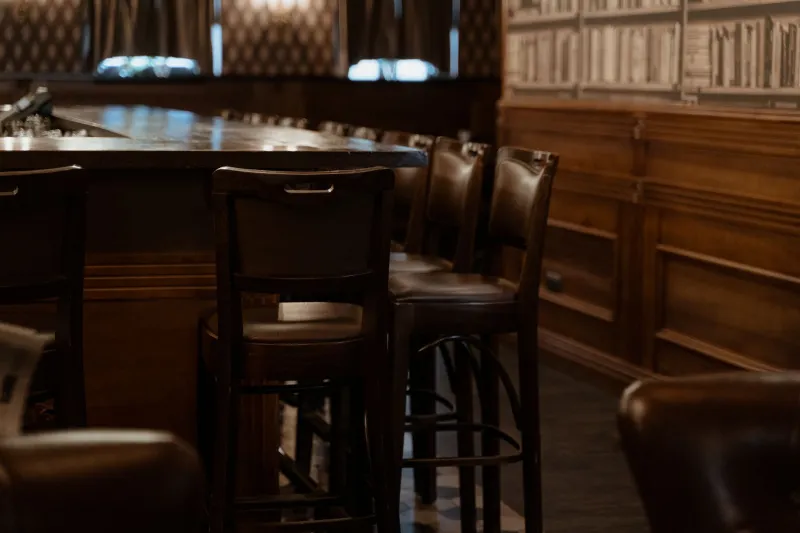
Then sit down. Really sit. Worn-in seating is a sign that people have been comfortable here for years. A settle with a bit of give, a bench with a cushion, a chair that does not require a strategy to rise from. Patina matters too: armrests smoothed by use, floorboards with a dip in them, brass that has been touched rather than lacquered. There is a difference between worn and shabby, and most people can feel it within a minute.
Clutter versus character
Horse brasses are not compulsory, but they are a useful test case. A few old brasses with a story, hung where they catch the light, can feel like part of the building's memory. A wall of identical brasses bought by the metre feels like a theme. Character accretes. Clutter is installed.
Ask yourself whether the objects in the room belong to the pub or to a mood board. Old photographs of the village, a jug from a local brewery, a dog bowl by the door, a bookshelf with actual books — these things earn their place. A fake antique sign about gin, a plastic tankard and a chalkboard reading 'Live, Laugh, Local' do not. Clutter gets in the way. Character makes room for you.
The menu should follow the season
The menu is part of the atmosphere, even before the food arrives. A country pub in December should be thinking about roots, brassicas, game, pies and slow cooking. In July it should be thinking about peas, salads, soft fruit and fish. If the menu is identical in every month of the year, the kitchen is not really following the season; it is following a printer's schedule.
A short menu with a handwritten specials board is usually a better sign than a laminated book of possibilities. Ask where the game comes from. Ask what the soup is. Ask whether the vegetables are local when they can be. The answers tell you whether the pub is cooking with the place it sits in or simply reheating a concept.
A practical checklist
Before you settle in, run a quiet audit:
- Is the fire lit and drawing in winter?
- Are the hand pumps on and the ale fresh?
- Is the lighting layered rather than glaring?
- Are the seats comfortable enough to hold you for an hour?
- Does the room feel used rather than styled?
- Is there character without clutter?
- Does the menu change with the season?
- Can the staff tell you what is local?
- Is there a corner where a dog, a book or a quiet pint would be welcome?
- Would you stay for a second drink even if you had only planned one?
That last question is the real test. Atmosphere is not a checklist, but a checklist can help you notice what creates it. The best country pubs do not announce their virtues. They simply make it easy to stay.
Why the small choices matter
Every one of these details is a form of hospitality made visible. A dry match, a clean line, a chair that holds you, a menu that knows what month it is — none of them are grand gestures. Together, they tell you whether you are a guest or a transaction.
In 2026, plenty of pubs can style a room to look like a country pub. Fewer can keep a fire, a cellar and a kitchen working in the same direction. That is the difference between a pub that photographs well and a pub that feels right. The horse brasses are optional. The hearth smoke, the hand pumps and the welcome are not.