The Horse in the Gilt: How to Read a White Horse Pub Before You Order
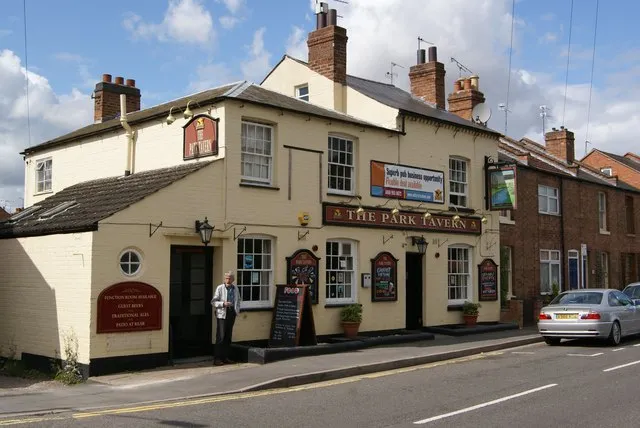
Photo: Colin Craig, CC BY-SA 2.0, via Wikimedia Commons
You can spot them from a distance: a white horse on a hanging board, sometimes gilded, sometimes a little tired, often staring out over a village green or a busy old coaching road. The White Horse is one of Britain’s most familiar pub names, but familiarity can make us lazy. We see the horse, we push the door, we order the bitter. We rarely ask why the horse is there in the first place.
That is a shame, because the White Horse is one of the more generous pub names. It has several possible ancestries, and each one leaves a different fingerprint on the building, the sign and the feel of the place. Two White Horse pubs can share a name and almost nothing else. One might be a chalk-country inn at the foot of a prehistoric hill figure; another might be a Georgian town pub with a royal horse over the door. Learning to tell them apart is a small pleasure, and a useful one.
A name with several family trees
Unlike the Red Lion, which is largely a heraldic convention, or the Crown, which does what it says on the tin, the White Horse can point in several directions at once. It can be a local landmark name, a piece of Saxon horse lore, a Hanoverian royal symbol, or simply a good image that a landlord liked the look of. Pub names are not always documents. They are often conversations, repainted every few decades.
Still, the sign is a starting point. Look at the horse before you look at the menu. Is it a chalk outline, a heraldic beast, a working horse, a racing silhouette? Is it rampant, courant, stylised or oddly realistic? The answer will not give you the whole history of the pub, but it will give you a question to ask at the bar.
The chalk horse and the pub at the foot of the hill
In Wiltshire, Oxfordshire and parts of the Downs, the White Horse is often a landscape name first and a pub name second. Uffington, Westbury, Cherhill and Osmington all have their white horses, and pubs nearby tend to borrow the silhouette. If the sign shows a long, lean, almost abstract horse, there is a decent chance it is nodding to a hill figure rather than a royal crest.
These pubs often have a particular rhythm. They are walking pubs, Sunday-afternoon pubs, places where boots are tolerated and dogs are not a surprise. The beer might be local, the menu might lean on sandwiches and roasts, and the wall might carry a photograph of the horse cut into the hillside. If you are near a chalk figure and the pub is called the White Horse, ask the landlord which horse they mean. The answer is usually a good story, and sometimes a good walk.
Hengist, Horsa and the older horse
The white horse also has an older, stranger layer in British folklore. The Saxons brought horse imagery with them, and the names Hengist and Horsa — both linked to horses — sit in the background of Kentish and wider English legend. The white horse of Kent, the rampant Invicta horse, is a different beast from the chalk horse, but it shares the same basic idea: the horse as emblem, as marker, as a creature that belongs to a place.
Most White Horse pubs will not be able to trace themselves directly to Saxon settlers. Pub history is rarely that tidy. But you do sometimes find a sign that leans heraldic rather than landscape: a horse on a coloured field, perhaps rampant, perhaps with a shield. That is a cue to look at the building’s age and the local civic symbols. The horse may be a local badge rather than a chalk hill.
The Hanoverian horse in the gilt
Then there is the royal connection. From the early eighteenth century, the House of Hanover brought the white horse back into British royal imagery, and the name became a safe, patriotic choice for an inn or alehouse. Many White Horse pubs were named or renamed in that period, and some still carry a Hanoverian white horse on the sign, often a little more polished and less earthy than the chalk versions.
This is where the sign’s lettering starts to matter. A Georgian frontage, a symmetrical facade, a gilded serif on the board and a horse that looks like it has been to court — these are hints of a different kind of White Horse. It may have been a coaching inn, a market-town pub, a place built for travellers rather than hill-walkers. The horse is still white, but the accent has changed.
Read the sign, then read the room
Pub signs are not reliable archives. They get repainted, replaced and redesigned by breweries, landlords and graphic designers with strong opinions. But they are still worth reading. Look at the bracket ironwork, the shape of the board, the lettering, the way the horse is drawn. A hand-painted horse with a slightly wonky eye can tell you more about a pub’s character than a laminated mission statement ever will.
Then look at the room. A White Horse with a fire, a few local ales and a chalkboard that names the butcher is making one kind of argument. A White Horse with linen napkins and a wine list is making another. Neither is automatically better. The point is to notice the conversation between the name and the place. The horse is not a guarantee of anything, but it is a useful opening line.
At The White Horses, we like a sign that rewards a second look. The next time you pass a White Horse, do not just check the opening times. Check the horse. Is it chalk, crown or common? Is it a landmark, a legend or a landlord’s fancy? Then go in, order something local, and ask. You may not get the full history, but you will get a better pint out of it.