The Sunday Roast Clock: Why the Best Pubs Refuse to Serve All Day
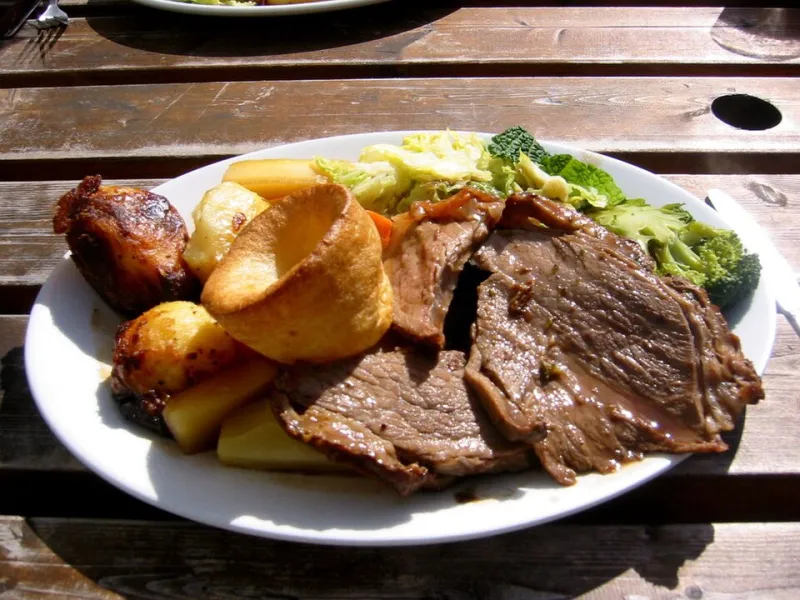
Photo: Jeremy Keith (Flickr user "adactio"), CC BY 2.0, via Wikimedia Commons
There is a particular kind of pub website that promises Sunday roast ‘served all day’. It sounds generous. It sounds democratic. It sounds like the sort of place that will not make you feel awkward if you roll in at 5.45pm wanting beef and Yorkshire pudding. And yet, the older I get, the more suspicious I become of it.
A Sunday roast is not a bowl of soup. It is a timetable on a plate. The potatoes need parboiling and roughing up. The beef needs resting. The Yorkshire puddings need a hot oven and a steady hand. The gravy needs to taste of something other than browning. None of that improves by being held under a lamp for six hours. The best country pubs understand this, which is why so many of them are quietly, stubbornly strict about time.
The roast has a clock, even if the menu does not say so
In 2026, pubs are under pressure to maximise every service. Energy bills, staffing, food costs and the general cost of keeping the lights on have made the all-day offer tempting. But a Sunday roast is one of the least flexible things a kitchen can serve well. It is a dish built around a brief window: meat rested and sliced, spuds crisp, greens just cooked, gravy hot but not gluey.
That is why the sensible serving window tends to be short. Noon until four, perhaps. Noon until sold out. Last orders at three-thirty. It is not laziness. It is discipline. A kitchen that protects that window is telling you it would rather serve fewer roasts properly than a whole afternoon of tired ones.
Why the 4pm cut-off is a good sign
The 4pm cut-off is not a universal rule, but it is a useful signal. After four, a pub kitchen is usually turning its attention to the evening menu. The roast meats have been carved, the Yorkies have been kept warm for as long as they can stand it and the gravy has been topped up one too many times. If a pub will serve you a roast at 8pm, the question is not whether they can. The question is how.
A pub that says ‘sorry, roasts finish at four’ is making a small, old-fashioned promise: what we serve within the window is the real thing. That willingness to say no is more valuable than an all-day menu that promises everything and delivers a plate of sad potatoes at half past six. It also tells you the kitchen has a plan. It knows what Sunday is for.
Staggered sittings are not a conveyor belt
The best Sunday pubs do not seat everyone at once, and they do not rush you out. They stagger bookings in waves: twelve, half past one, three. That rhythm gives the kitchen time to rest meat, finish potatoes and send out plates that have not been sitting under lights. It also gives the pub a better atmosphere. You are not eating in a canteen. You are eating in a pub that has done this before.
A staggered sitting is a compromise, of course. It means you may need to book. It means the pub may not be able to squeeze in a walk-in at two o’clock because the next wave is already in the oven. But that is the point. A roast is a shared exercise in timing: the kitchen, the bar and the table all agree to work within the same clock.
What the clock tells you before you order
You can learn a lot from a Sunday menu before the food arrives. A short serving window is usually a good sign. So is the phrase ‘until we run out’. So is a menu that offers two or three roasts rather than seven. So is a member of staff who asks how you want the beef, rather than assuming you want it grey.
A carvery can be a fine thing, but it is a different contract. The meat is carved to order, the vegetables are kept hot and the queue is part of the experience. That is not the same as a plated roast from a kitchen that has timed every element. Neither is inherently better, but they are not interchangeable. If a pub promises a plated Sunday roast at any hour of the day, be sceptical. If it promises a proper window and sticks to it, be encouraged.
The quiet no is part of the hospitality
There is a particular kind of pub confidence in saying no. Not the rude kind, but the calm kind: ‘We stop roasts at four, but you are very welcome to have a pint by the fire.’ That is hospitality too. It is the pub knowing what it is good at and refusing to pretend otherwise.
In a year when every pub is being told to diversify, extend and maximise, the Sunday roast clock feels almost rebellious. It says that some things are worth doing properly, and that properly means within limits. The best country pubs have always understood this. They are not trying to be everything to everyone. They are trying to be a good pub on a Sunday, for the hours that make sense.
So next time you see a pub advertising roasts from noon till nine, do not be impressed. Look for the one that says ‘until four’ or ‘until sold out’. That is the pub that has done the maths, rested the beef and made a decision. It is also the one most likely to give you a Sunday lunch worth putting your phone down for.